

The way we view the classroom is drastically different now than it was in the past. In the past, a student would have sketched their idea on paper and hoped that their design worked. Today, with STEM instruction, learners can print their designs, test and refine them within hours of creating them. As the fastest-growing tool for education in STEM, 3D printing helps to remove the barriers between theory and application across all areas of study within STEM.
3D printing has become a game-changer in the way students, who are interested in product design, mechanical engineering, architecture and healthcare innovation, or any other area possible within STEM, will be instructed on the creation of the products they design. To find out more about how this technology is revolutionizing the learning process for the next generation of engineers, architects and healthcare innovators, keep reading.
3D Printing Projects for Students
Product Design and Mechanical Engineering
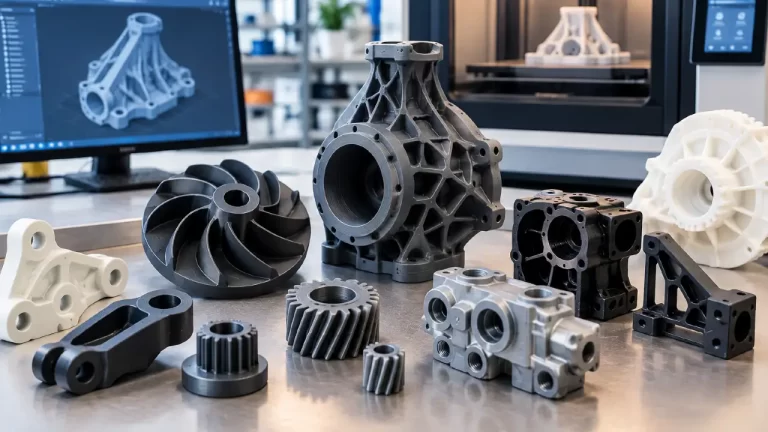
3D printing is fundamentally changing how students learn in mechanical engineering and product design within STEM. The fields of mechanical engineering and product design require students to have a combination of theory and actual hands-on experience through prototyping, testing, and reworking ideas. Using 3D printing allows mechanical engineering students to do the following:
- Create custom gears, brackets and structural parts from scratch.
- Test load-bearing structures and their ability to withstand different amounts of stress using physical models.
- Rapidly modify and improve upon existing designs without incurring the costs or lead times associated with traditional manufacturing processes.
Visualize and understand how all the parts fit together before committing to a building of a final assembly of all parts.
Traditionally, students would have to wait several weeks for a company to manufacture their parts before they could try to assemble a working prototype, then analyze what went wrong and redesign it. With the use of 3D printing, a student can print a working prototype overnight, evaluate what went wrong, and design other parts by the next morning. This rapid feedback cycle builds better engineering instincts than any textbook exercise could ever do.
Architecture and Industrial Design
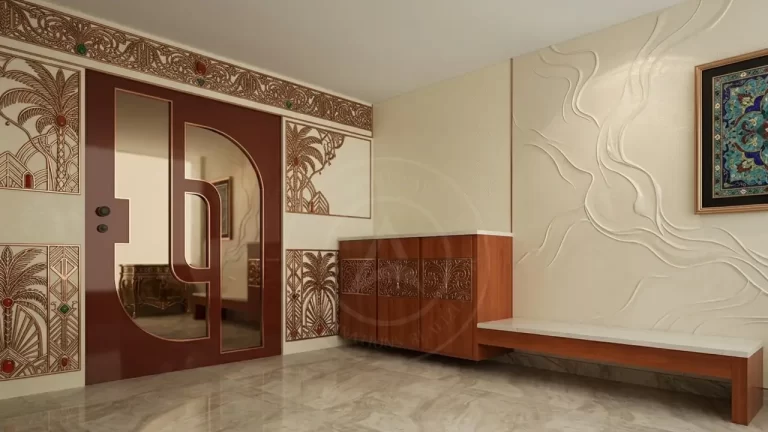
The importance of scale and spatial awareness cannot be understated for architecture/engineering students and industrial design students — 3D printing opens up a whole new level of educational opportunity that the traditional methods of hand drafting and digitally rendered images will never be able to deliver.
Architecture/engineering students are using 3D printing to create:
- Architectural scale models with intricate design details and structural accuracy
- Tangible prototypes to explore aesthetic and ergonomic values in industrial design
To experiment with forms that would not be possible to build by hand due to the complexity or unconventional geometric structure of the form Professional-caliber models to present to instructors, juror panels, and clients
The ability to create architectural scale models quickly and economically makes critique sessions between design students and reviewers considerably more effective — it allows the reviewer to physically compare proportions, spatial relationships and massing when compared to 2D drawings. Similarly, industrial design students will be able to better assess the grip comfort, visual balance, and user interaction with physical objects as compared to digital simulations of the same product.
Manufacturing and Prototyping
Students in STEM gain the most from the creation of the design by the process of 3D printing. The open-source aspect of 3D printing empowers students to develop prototypes or use previously printed items as new design sources. The crown jewel of 3D printing technology is the ability to rapidly iterate (reproduce) physical objects while keeping costs low and the timeline short. Here is a summary of how this benefits a STEM student;
• Produce iterating designs at low cost.
• 3D print designs that would be impractical to produce through traditional means, such as complex internal geometries, lattices, or organic shapes.
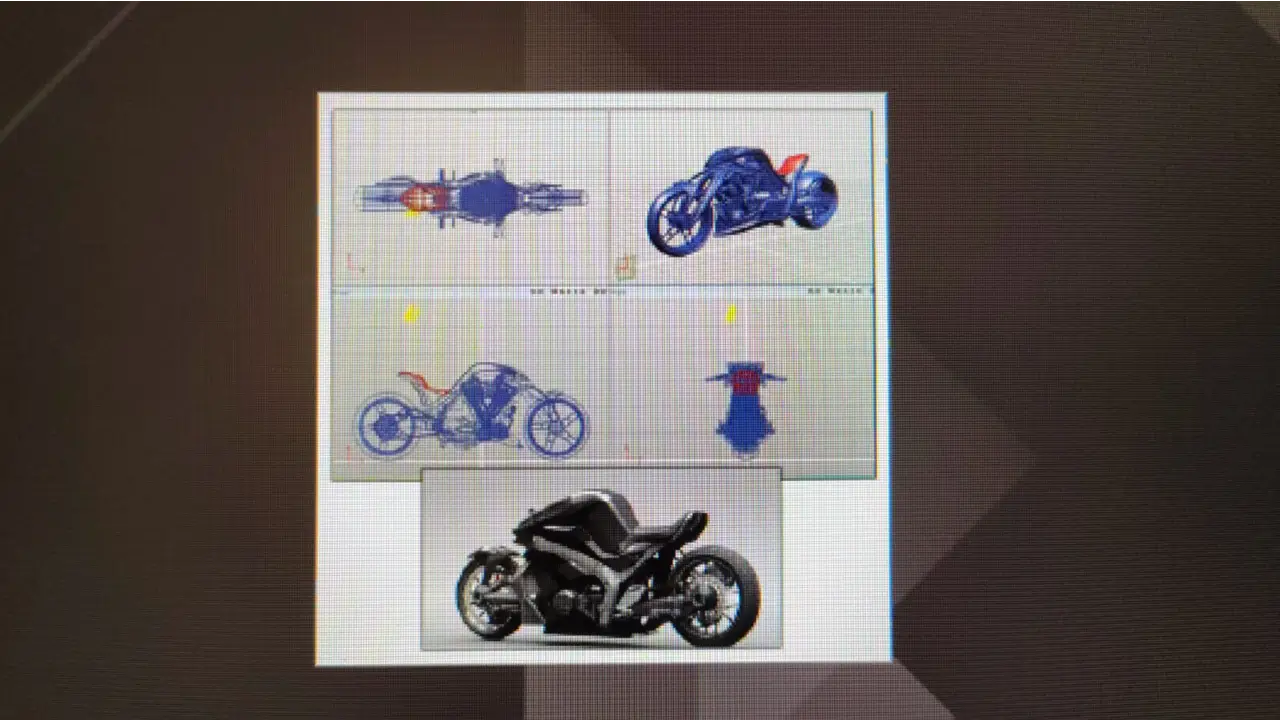
• Create CAD to production workflows that are representative of real-world manufacturing processes.
• 3D print using a diverse range of materials as opposed to just using one material, such as ABS or PLA.
The academic manufacturing and prototyping project no longer has to be done theoretically. A student can design a jig, fixture, or assembly tool and see that design come to life. A student can design and manufacture their product for a real-world application that has a direct correlation to their use of coursework and why it is a subject matter they wish to pursue professionally.
Healthcare Device Creation
One of the fundamentals of students utilizing 3D printing in schools is to develop health care products and devices. Medical technology is one of the fastest-growing fields within STEM and it is also the foundation of 3D printing.
STEM students who are studying to be Biomedical Engineers, Health Science Professionals, or in inter-disciplinary design are utilizing 3D printing for:
- To design and create assistive devices like custom prosthetic hands or orthetics
- To create anatomical models for surgical planning and medical education
- Prototype medical instruments and health monitoring devices
- Developing concepts for specific patient implants and enclosures for electrical health devices.
These projects have had a significant impact beyond the academic environment. Medical devices created from student lead projects have actually been provided to real patients such as low-cost prosthetics for children, custom splints and assistive devices when the major manufacturers have not yet created them.
It is the ultimate lesson for STEM students that design is not just an exercise, but a way to make the world a better place.
Why 3DArtway Supports STEM Learners
At 3DArtway, we support STEM learners because we think that classrooms are where the innovations of tomorrow are being developed today. We have the following resources available to help students, teachers and educational institutions:
High-quality 3D printing on predictable schedules and on a budget
Expertise on material selection to ensure students select the appropriate filament or resin for their specific projects
Design consulting assistance with complex architectural scale models and medical devices, as well as recommendations on how to construct architectural models
A fast turnaround on projects so that students won’t be held back from completing projects before deadlines and competing with other students.
We’ll assist you with your first academic project or senior thesis mechanical project in helping you design, create and produce your project.
Also Read: Why 3DArtway is the Best 3D Printing Service in Mumbai?
Conclusion:
3D Printing is not just some new toy you play with when you’re getting an education in science, technology, engineering, and math (STEM); rather, it offers a major change in the way students will learn, create, and contribute. 3D printing makes product design and mechanical engineering more tactile and allows for an iterative process to be used with all aspects of product development from concept through completion. It creates a physical model for students pursuing architecture or industrial design to present their ideas. It expands the boundaries of traditional manufacturing and prototyping by bringing it from the factory floor back into the classroom. This process also enables students to develop tangible devices for the medical field with a sense of purpose. In addition, all academic and mechanical projects will be able to go beyond just theory and have physical exists to demonstrate that they actually occurred.
The next great engineer, architect or innovative inventor of medical devices may be printing their award-winning product today.
Are you ready to develop your STEM project into a reality? Take a look at 3DArtway’s 3D printing services.