

Precision Metal 3D Printing
Engineered for Production
Turn complex designs into production-ready metal parts with industrial 3D printing.
From prototype to end-use part, 3D Artway combines certified processes, in-house metallurgical expertise, and rigorous quality control to deliver metal components you can put into real-world service — not just show on a shelf.
Metal additive manufacturing has moved past the “interesting prototype” stage into aerospace brackets, medical implants, tooling inserts, and low-volume production runs. But the technology is only as good as the team running it. Print parameters, powder handling, post-processing, and inspection all determine whether a part is production-grade or scrap.
At 3D Artway, our engineers work hands-on with every build — reviewing designs for manufacturability, selecting the right process and alloy for the application, and validating parts against your spec before they ship. We don’t just operate machines; we engineer outcomes.
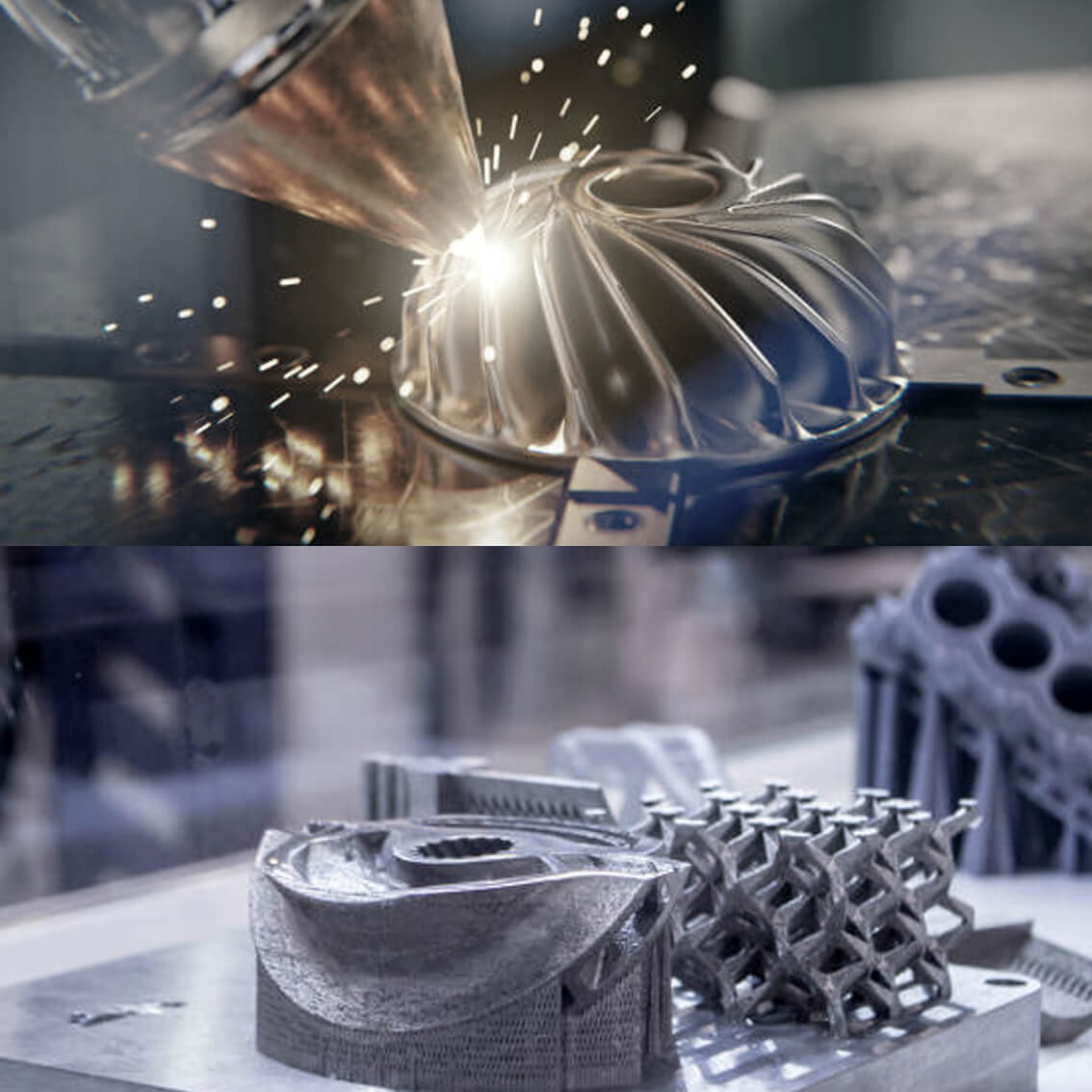
Advanced Powder-Bed Fusion Technology
DMLS — Direct Metal Laser Sintering
Build intricate metal components layer by layer using precision laser processing of metal powder. DMLS is well suited for functional prototypes, complex geometries, and production components.
SLM — Selective Laser Melting
Use high-energy laser melting to produce dense, high-performance metal parts with demanding mechanical requirements. SLM is ideal for applications where strength, precision, and material performance matter.
Metal 3D Printing Material
1. Aluminum (AlSi10Mg) – Lightweight with good thermal properties, used in automotive and electronics.
2. SS- (stainless steel) (316) – Great for general parts, corrosion resistance, and strong end-use mechanical components.
3. Titanium (Ti6Al4V) – Offers a high strength-to-weight ratio and biocompatibility for aerospace and medical implants.
4. Copper – Valued for high electrical and thermal conductivity in heat exchangers and motors.
5. Inconel – Withstands extreme heat and pressure for jet and rocket engines.
Batch Production
Vacuum Casting
Urethane or polyurethane casting is a manufacturing process that uses a vacuum chamber to pour liquid resin into a flexible silicone Mold.
Vacuum casting is best suited for low-volume production runs ranging from 1 to 100 parts. A single silicone Mold typically lasts for 15 to 25 castings before wear degrades the detail and dimensional accuracy, though specialized setups can stretch up to 50 or 100 parts
Machining
Soft Tooling
Fast, low-cost Mold materials like silicone, epoxy, or aluminium instead of hard steel. It is ideal for rapid prototyping, testing designs, and short production runs of up to a few thousand parts.
QTY– 25 / 50 / 100 / 250
Hard Tooling
creating durable, long-lasting production Molds or dies out of hardened tool steels or metals using high-precision CNC milling, turning, and Electrical Discharge Machining
QTY– 250+
Get a Quote
Industrial metal 3D printing for complex, high-performance parts.